Newsletter Subscribe
Enter your email address below and subscribe to our newsletter

 ByJohn A
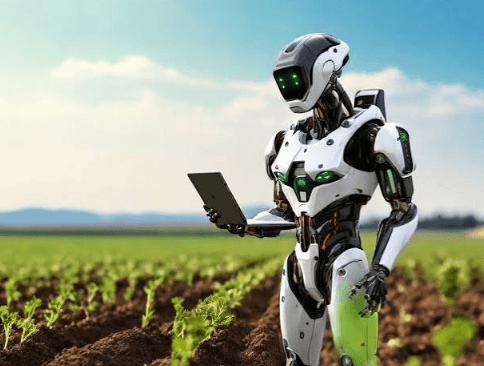
AI-powered agricultural robots restructure field work with targeted tasks and sensor-driven feedback. They combine perception, decision-making, and modular tools to deter heavy inputs while optimizing labor flows. Actuators translate data into precise actions, enabling variable-rate treatments and adaptive irrigation. Real-world deployments reveal ROI depends on field complexity, labor dynamics, and workflow integration across farm sizes. The implications for practice are clear, but the path to scalable deployment remains nuanced and worthy of careful testing.
AI-powered agricultural robots perform targeted tasks with precision and efficiency, enhancing crop health and farm productivity while reducing labor and chemical inputs. They optimize field work through adaptive schedules and sensor feedback, enabling on-demand maintenance.
Precision irrigation and weed mapping are central capabilities, reducing water waste and herbicide use.
System-wide thinking supports scalable, autonomous workflows and farmer empowerment through modular toolsets.
Perception in the field hinges on integrating diverse sensors and data streams to form a coherent understanding of crop status and environmental conditions. Robots fuse visual, spectral, tactile, and contextual signals into models that guide decisions.
Perception calibration aligns sensors with real-world references; decision latency accounts for processing, uncertainty, and action timing, ensuring reliable, timely responses while maintaining operational freedom.
Actuators and precision application translate perception and decision outputs into targeted, resource-saving actions. They convert observed plant needs into accurate dosing, variable-rate irrigation, and selective actuation, minimizing waste.
System checks ensure calibration drift remains within tolerance, preventing over- or under-application. Regular maintenance scheduling sustains responsiveness, reduces downtime, and preserves actuator precision, supporting resilient, freedom-loving farming through data-informed efficiency.
Across farm sizes, real-world deployments of AI-powered agricultural robots reveal a spectrum of ROI tied to field complexity, labor dynamics, and input costs. Though robot performance varies with terrain and crop, measured cost benefit emerges when sensors, autonomy, and scheduling align with workflows. adopters report faster tasks, reduced labor, and tangible savings, enabling scalable, adaptable operations across diverse farming contexts.
Fronted answer: Upfront costs vary by capability and scale; financing options include leases and loans with maintenance schedules. Data privacy, security, autonomous operation, extreme weather resilience, parts availability, farm management software integration, and ongoing routine calibration impact total cost.
Robots implement privacy safeguards and access control, prioritizing data ownership, with options for standalone systems or cloud storage; encryption protects transmissions, and regulatory compliance, incident response protocols, and scalable architectures support practical, experimental, freedom-seeking farmers.
Yes, they can operate autonomously, though with caveated endurance and safeguards. Autonomous resilience emerges through robust sensing and fail-safes; Extreme weather autonomy hinges on modular design, adaptive control, and transparent risk assessments for resilient field performance.
Maintenance cadence varies by model, but a practical baseline includes monthly checks, quarterly full inspections, and annual field tests. Common spare parts: belts, seals, sensors, bearings, and battery packs; routine calibration and firmware updates sustain experimental, systems-thinking performance for flexible farming.
See also: AI-Powered 3D Modeling Explained
Integration challenges arise, yet robots link via standard APIs, gateways, and data interoperability protocols, enabling autonomy feasibility. Weather resilience, maintenance cadence, and spare parts availability influence adoption; practitioners test workflows, iterating loops with practical-skills, experimental-minded, systems-thinking.
The practical yield of AI-powered ag robots hinges on integrated perception, decision-making, and precise actuation, all tuned to field realities. Operators experiment with sensor fusion, modular tools, and data-driven workflows to shrink inputs and boost reliability. Like a well‑tuned tractor from the future, they blend automation with human oversight, iterating on schedules and responses. Remember: ROI grows where field complexity is matched with adaptable routines, even as a medieval quill suddenly writes in silicon.